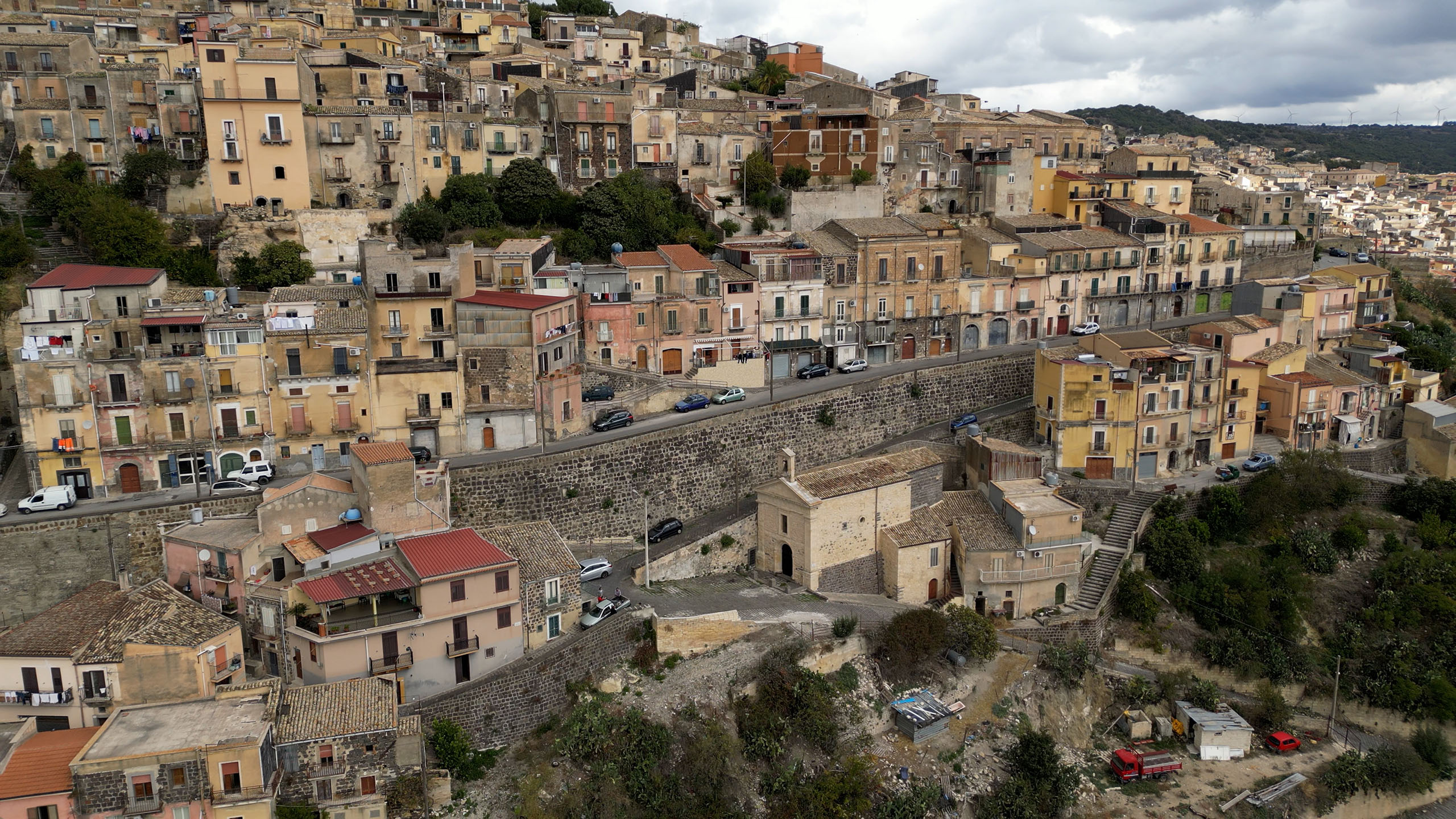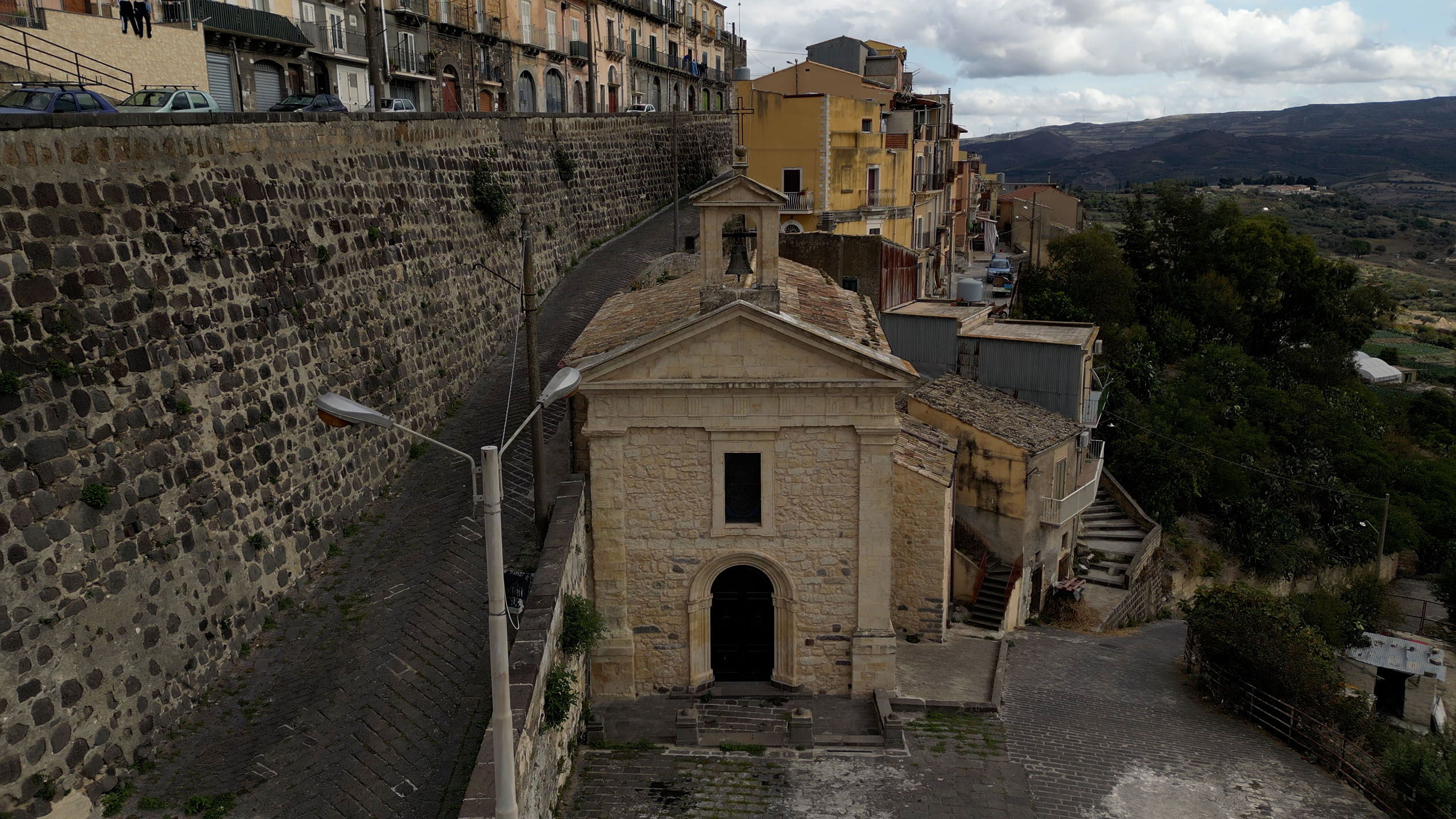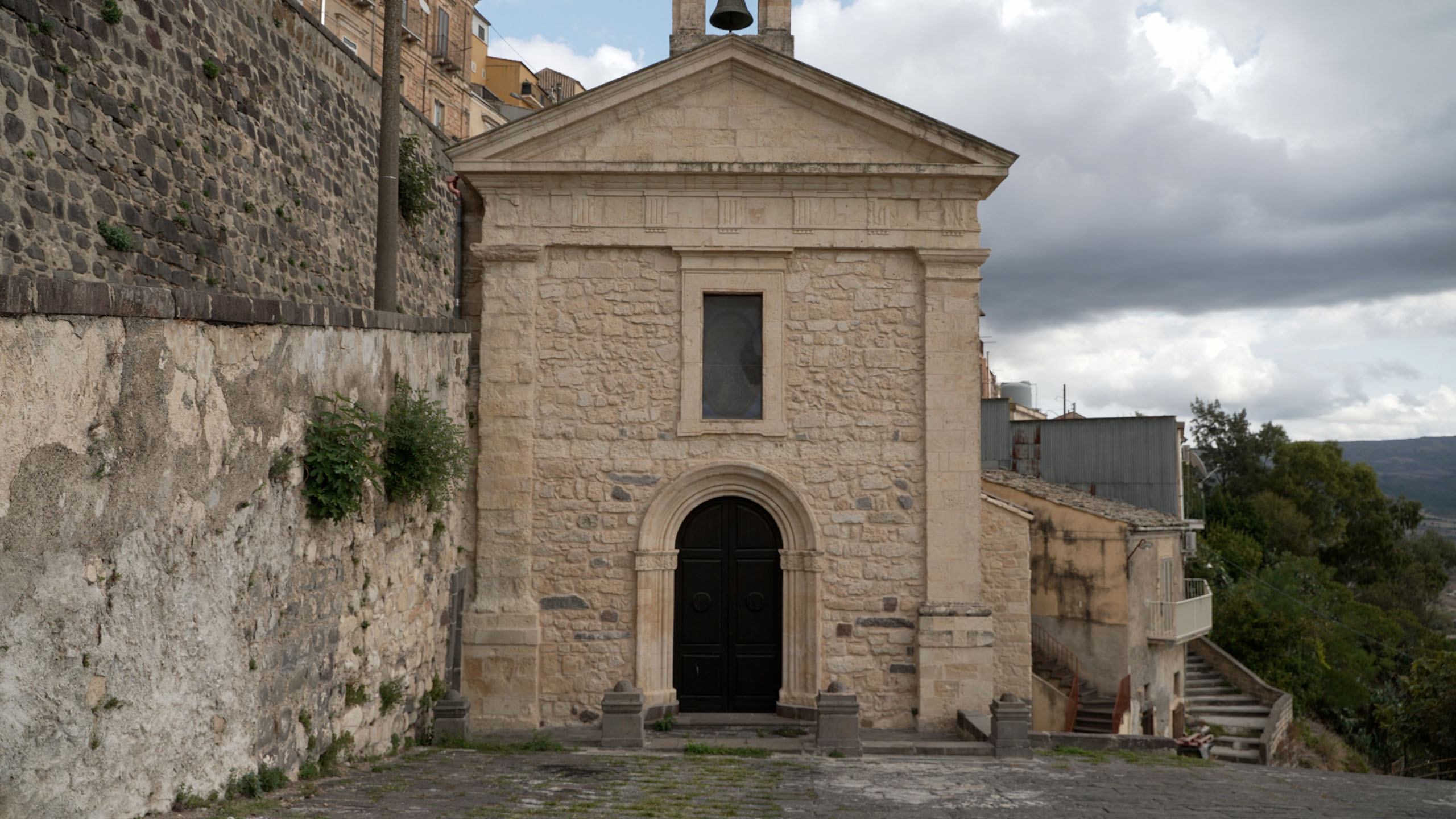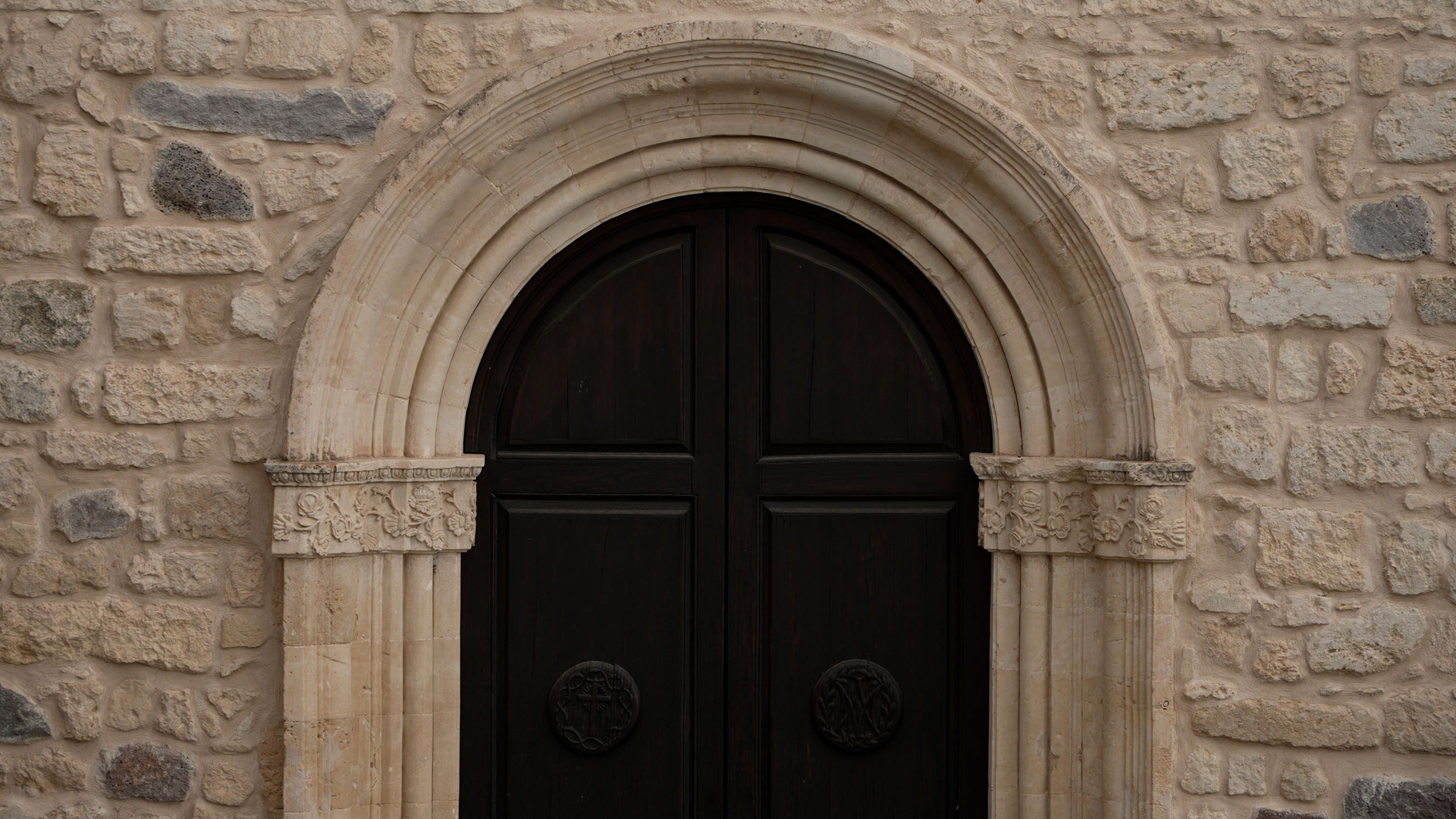
Built in the first half of the 19th century, it was already a place of worship in ancient times, as the cave of
the Madonna of the Danger, preserved in its original form in the centre of the left side of the nave, testifies.
The church is dedicated to St. Helena, mother of the emperor Constantine, but it owes its name to the image, considered miraculous, of the Madonna Liberator from Dangers, which represents her with the Blessed Child in her lap.
Giovanni Verga mentions it in his novel “Cavalleria rusticana”: “What has Turiddu to do with gnà Nunzia” said the neighbours,”who spends the night singing like a solitary sparrow? At last he came across Lola, who was returning from her journey to the Madonna of the Danger, and when she saw him, she turned neither white nor red, as if he had not been made her own”.