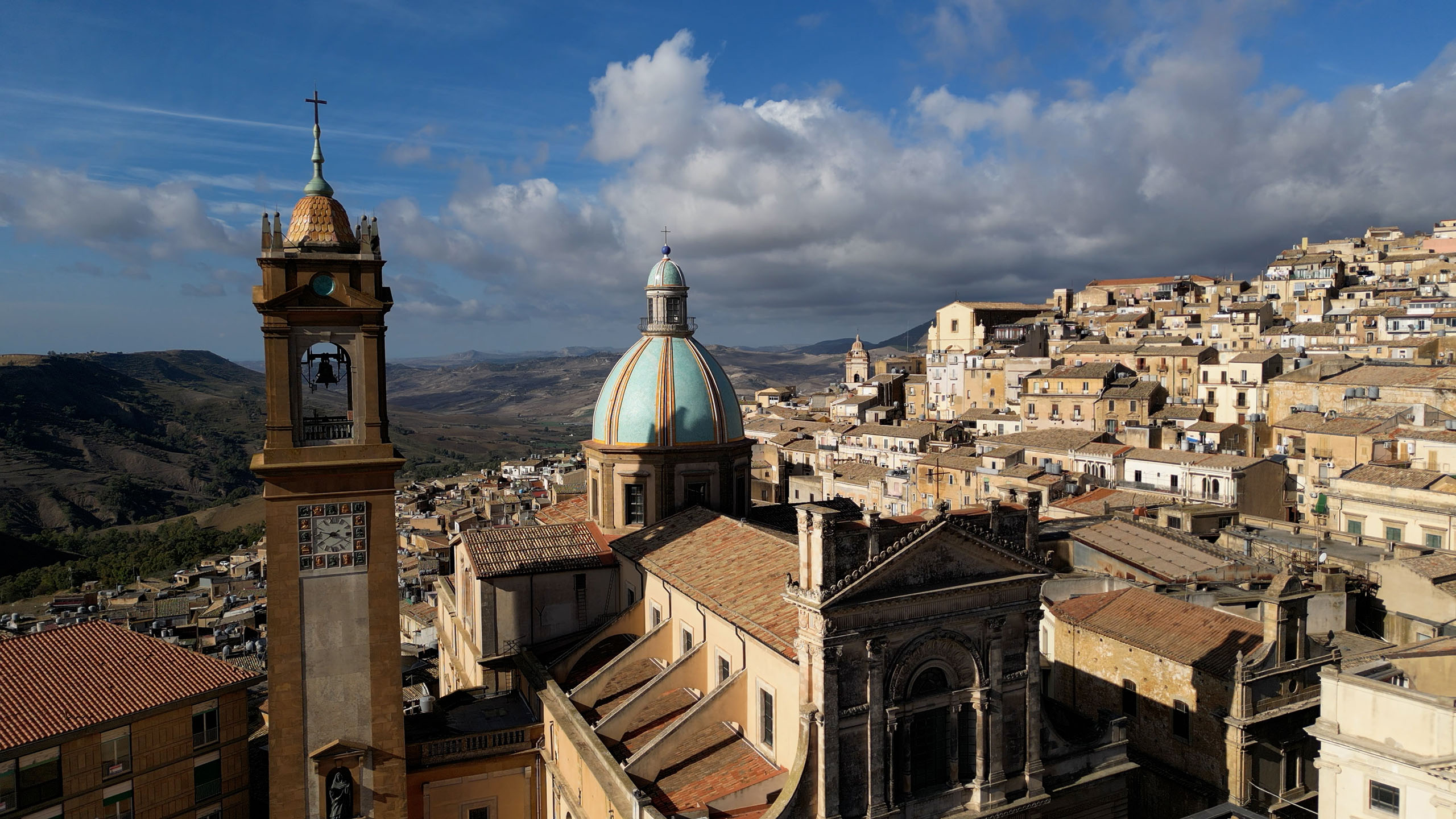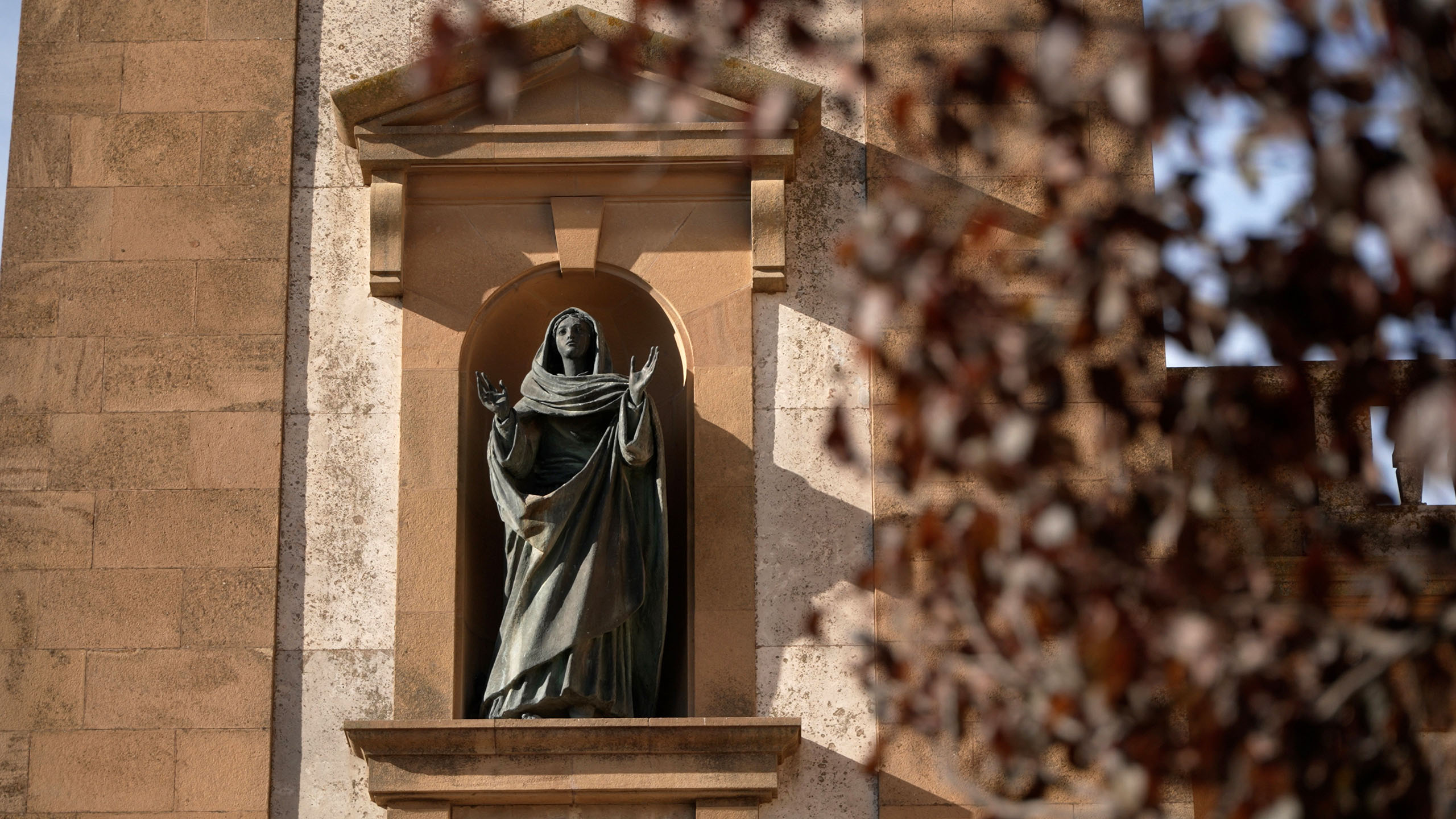
The Church of San Giuliano (St. Julian) was built in Norman times.
It was largely destroyed by earthquakes in 1542 and 1693.
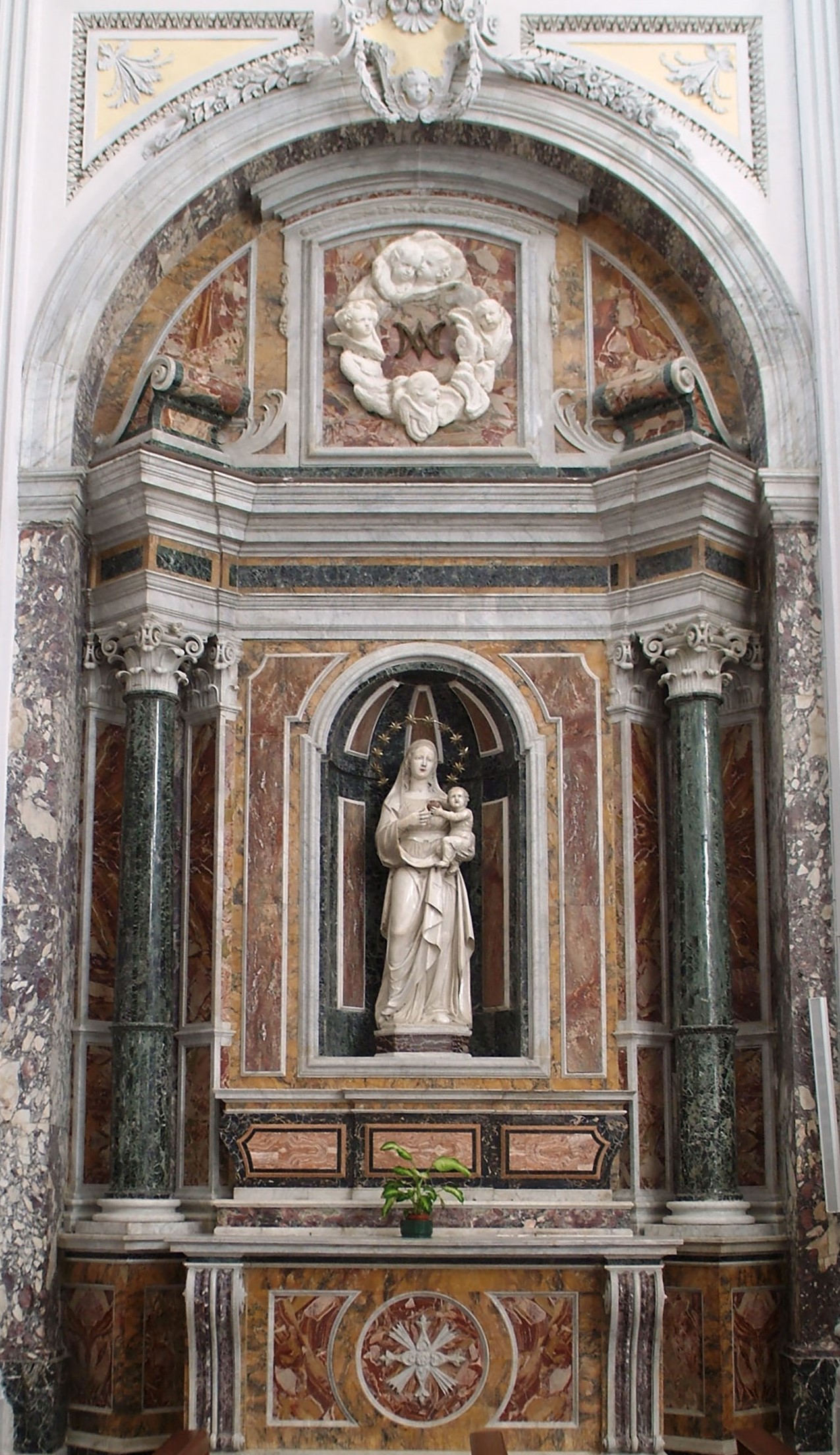
Over the centuries, illustrious masters and craftsmen of the island have enriched the church with their works. In 1816, the Basilica of San Giuliano became a cathedral, coinciding with the erection of the Bishopric in Caltagirone.
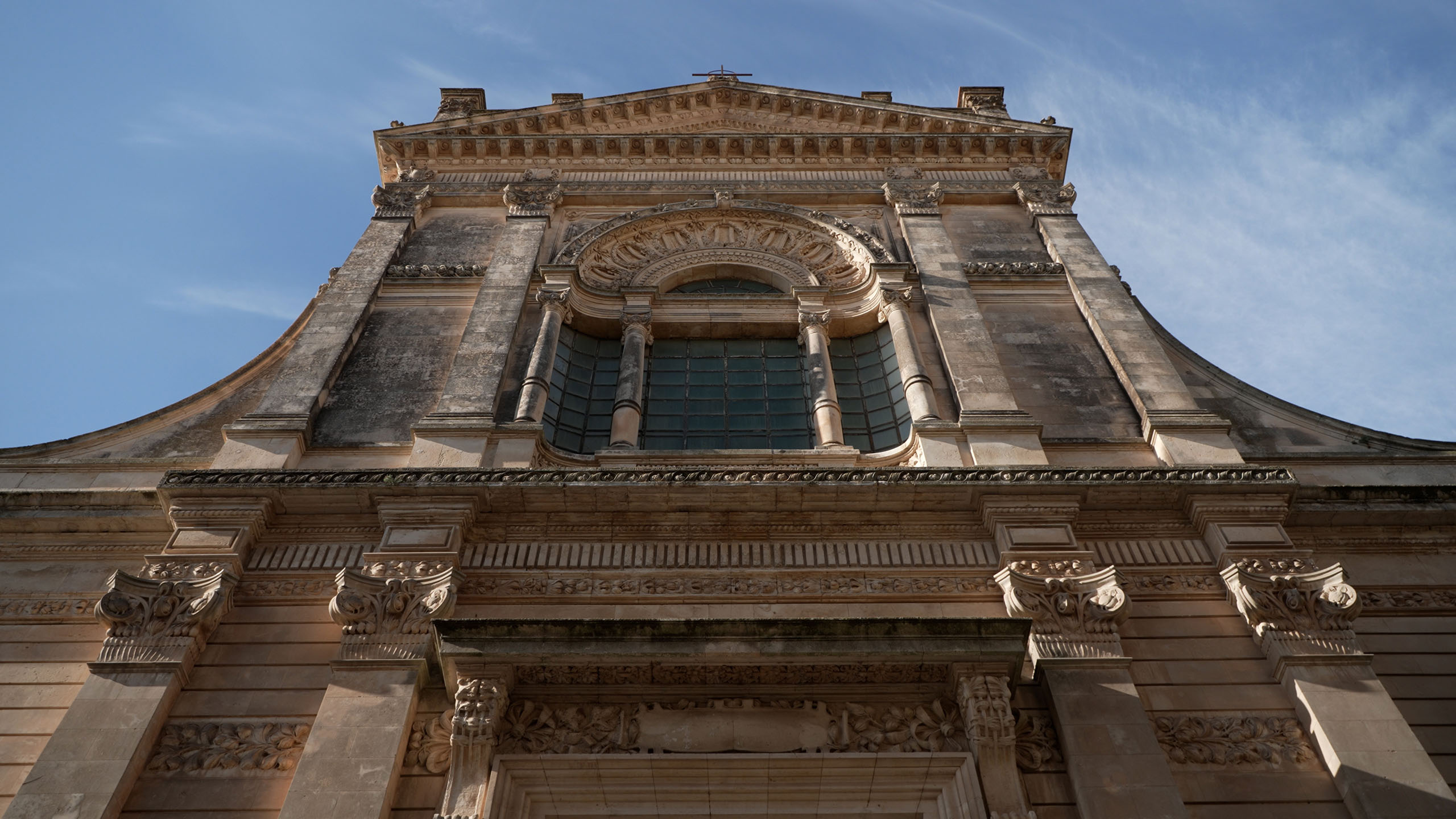
The main façade is made of white Ragusa stone and was built in the early 20th century in a floral Art Nouveau style by the Calatino architect Saverio Fragapane.
The splendid and imposing dome, covered with polychrome majolica from a later period, dominates the façade.
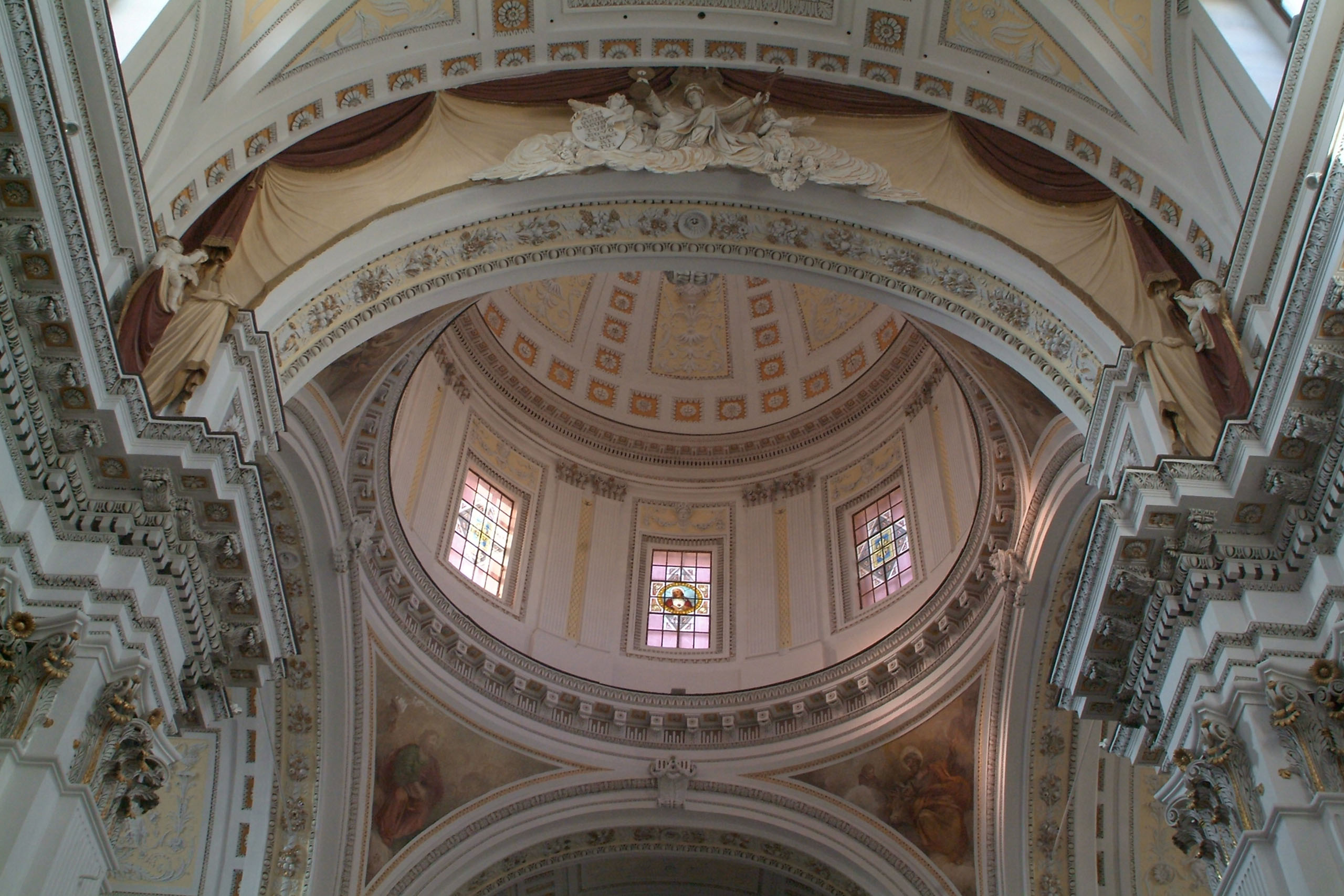
The interior of the building has three naves. The vault features frescoes painted by Giuseppe Vaccaro in 1862. The frescoes depict the transition from the Old Testament to the new cult established by Christ and entrusted to the Church.
Among the side altars, particularly dear to popular piety is the one that preserves the wooden statue of the Dead Christ which, together with the statue of the Virgin of Sorrows, is solemnly carried in procession on Good Friday with fervour and religious silence through the streets of the city.
The church also houses a Madonna della Mercede (Our Lady of Mercy), a sculptural work by the school of
Antonello Gagini.