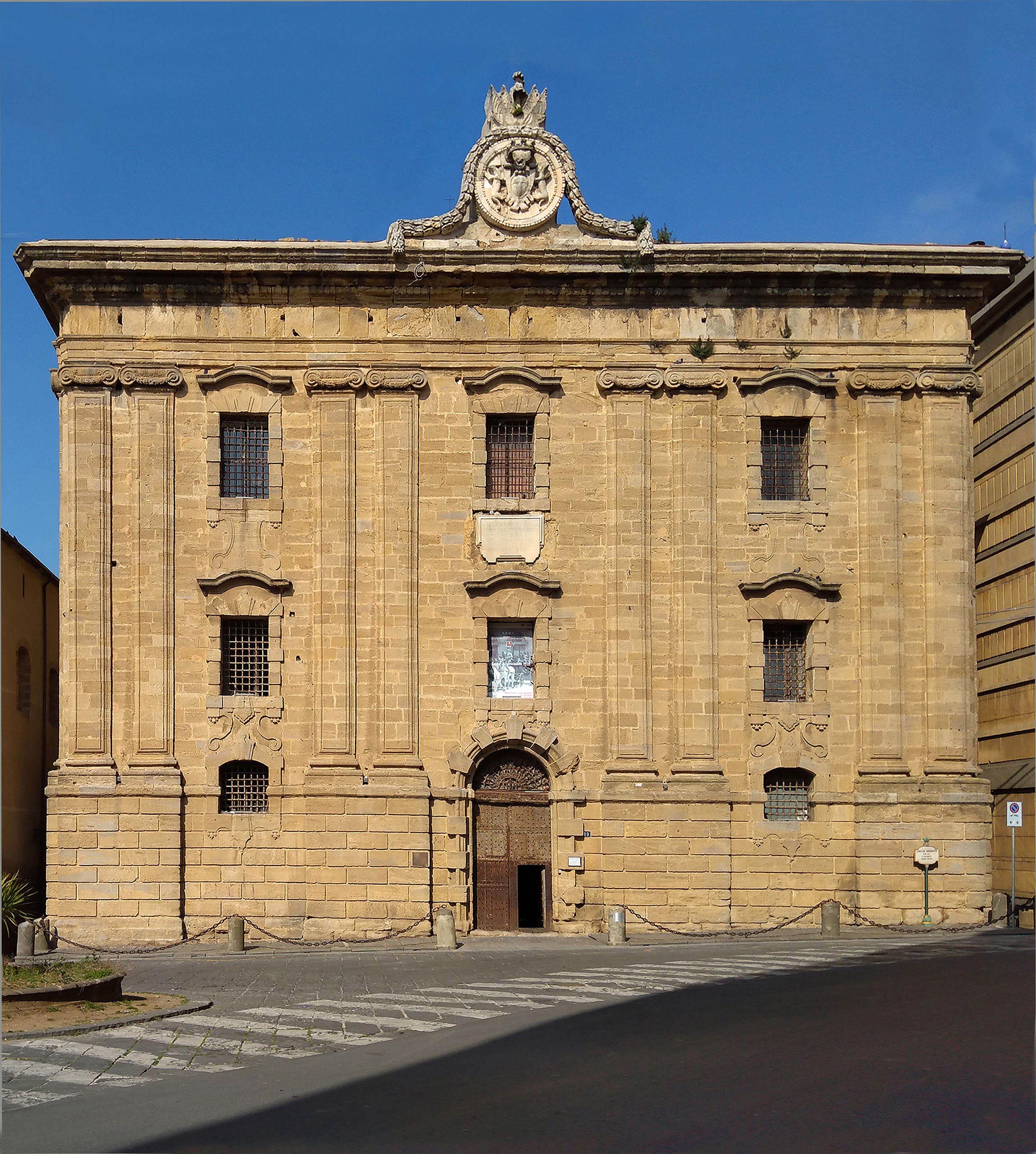
The impressive building, designed by Syracusan architect Natale Bonaiuto, features compact masses and a tripartite façade.
It has stood on the site of the former “cannatari” shops, which sold tableware, since 1798.
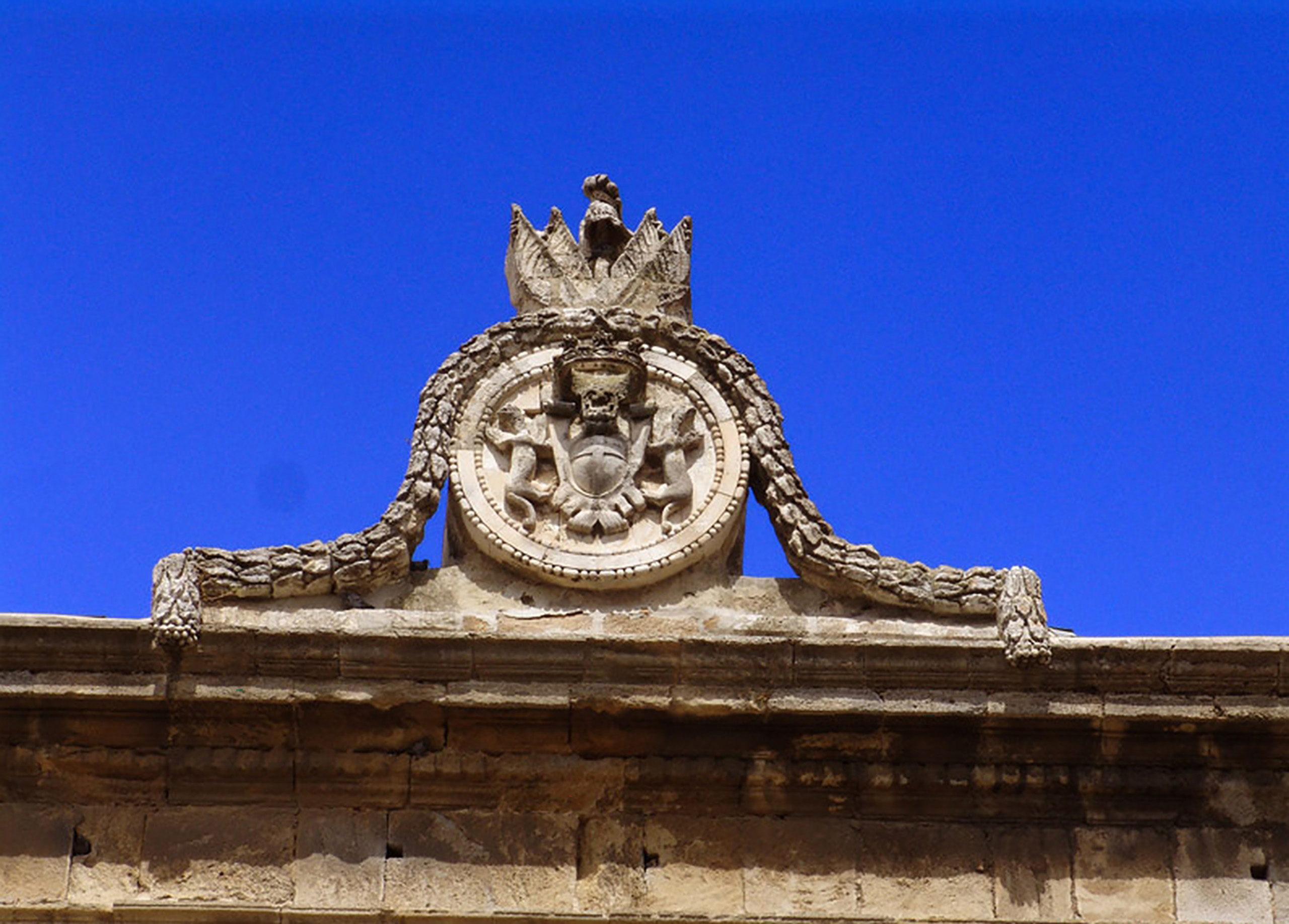
After the earthquake of 1693, the original Arab-Norman castle, which had also served as a prison, was destroyed, and this building was subsequently used for that purpose. With a square plan, severe shapes and built in local stone, it is softened by the volutes of the windows and the coat of arms of the city, placed at the top of the façade.
The elegant central entrance hall boasts a precious bronze door dating back to the 16th century.
This 18th-century prison structure is a perfect example of its kind and has witnessed important historical events.
In February 1799, a tumultuous uprising against the perceived Jacobins took place within the confines of the prison walls. The angry mob, shouting “Long live the King, long live the holy Faith!”, locked up hundreds of aristocrats who were believed to have pro-French sympathies. Among the prisoners were the deputies of the same prison and the engineer who took over from Bonaiuto.
When the prison function ended in 1890, it became the Monte di Pietà (pawn shop) in 1899. Unfortunately, this
choice was very detrimental as a large part of the unused premises were entrusted to a tobacco factory that carried out serious tampering.
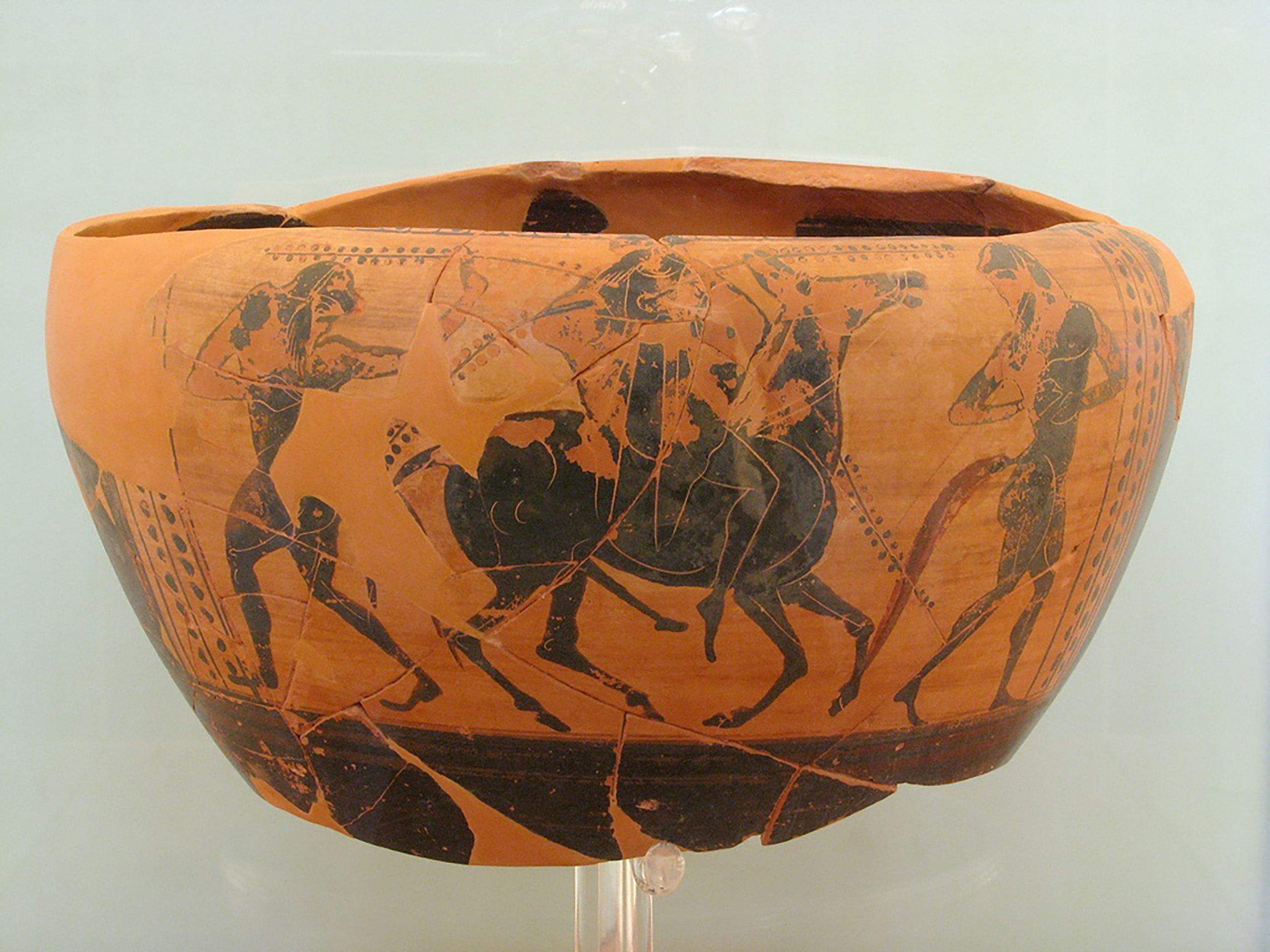
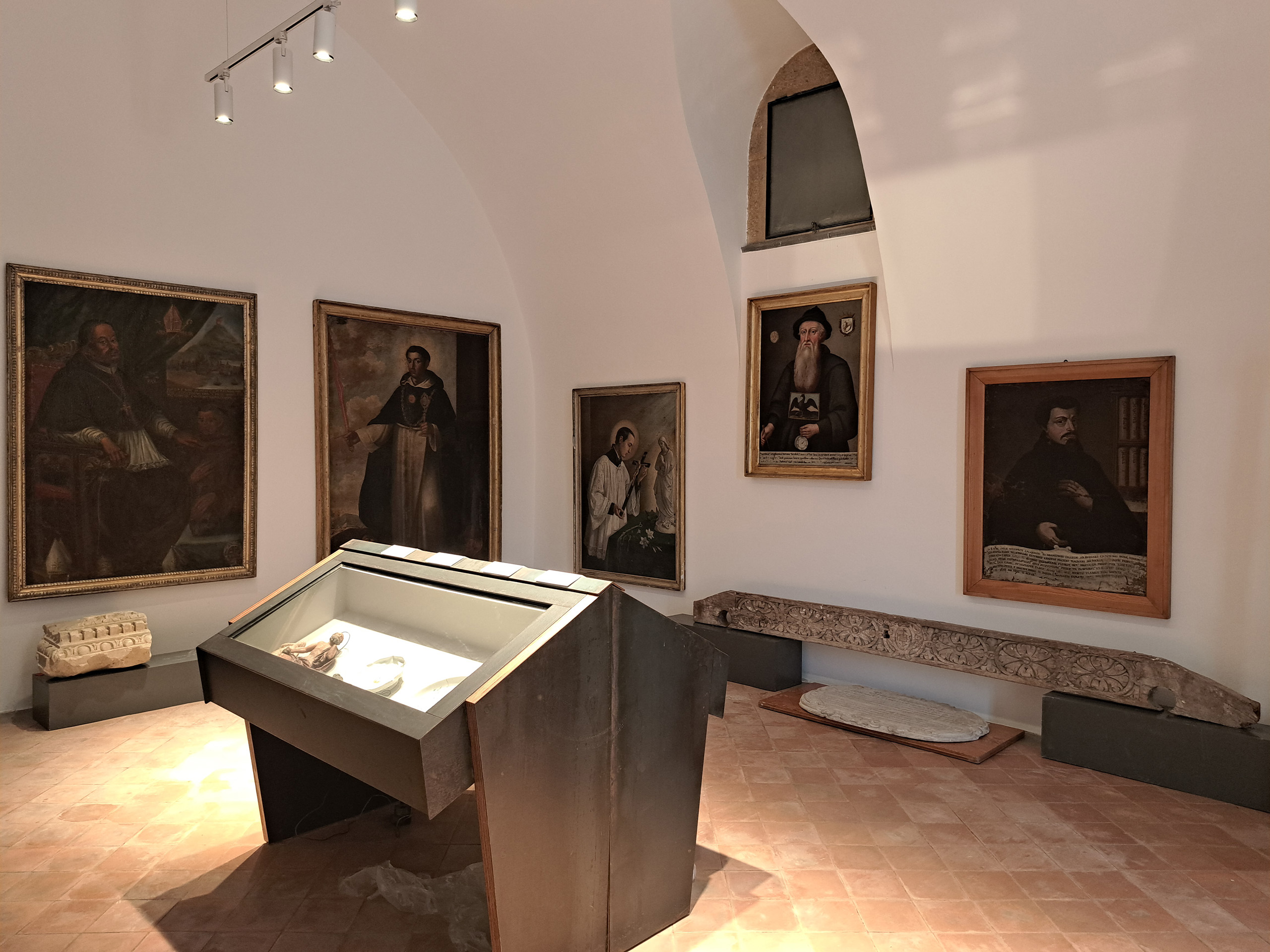
After the Second World War, the building was definitively used as the seat of the “Luigi Sturzo” Civic Museums.